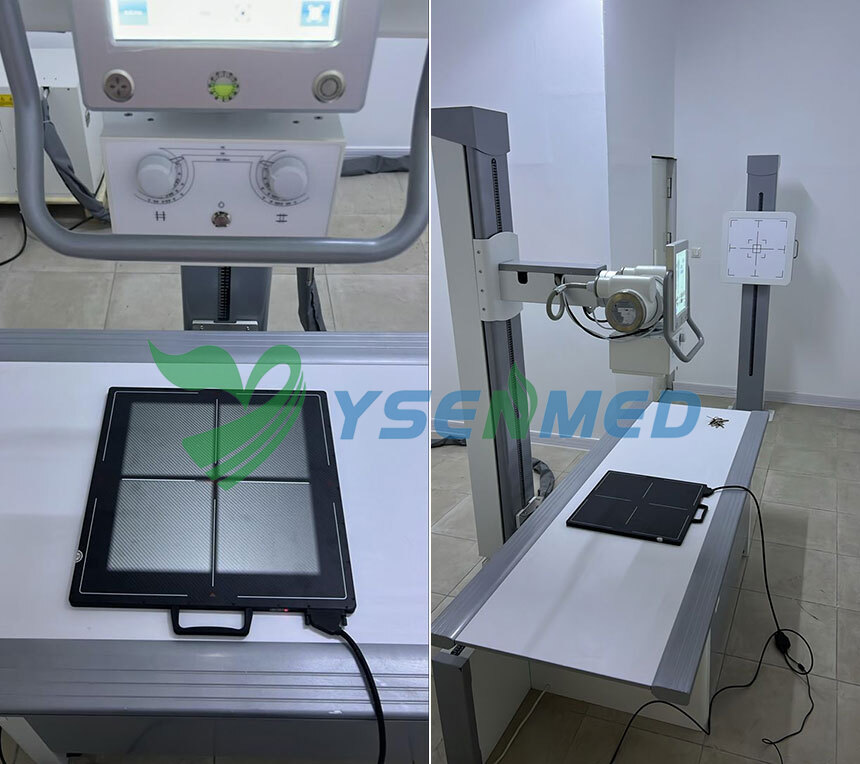
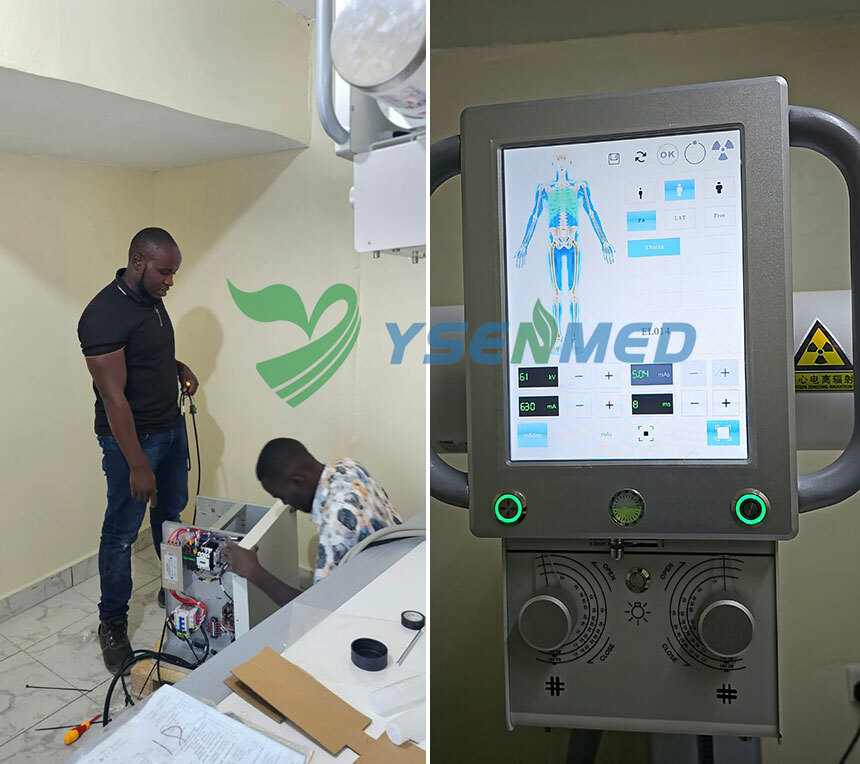
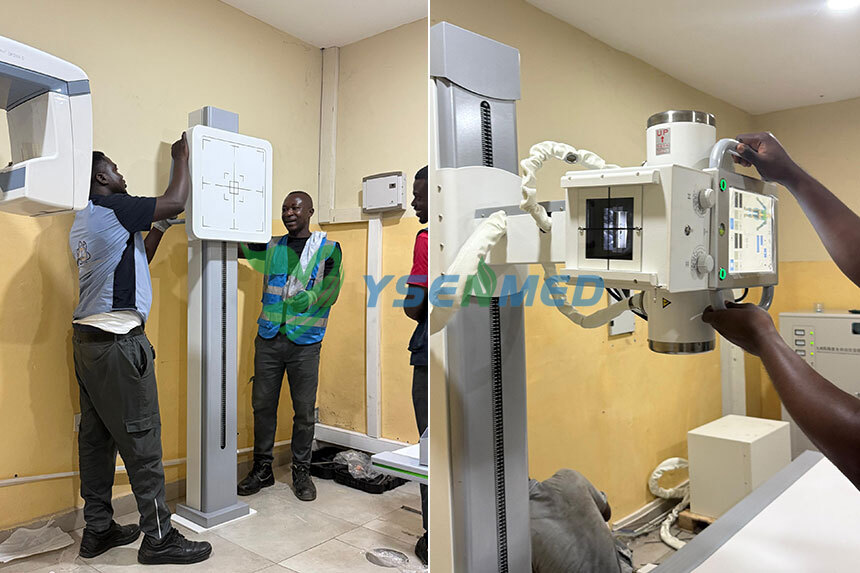
The price of a digital X-ray machine can vary significantly depending on the system configuration.
A compact 20kW digital radiography system for a small clinic is very different from a 50kW or 65kW hospital DR system equipped with a wireless flat panel detector, floating table, motorized stand, workstation, DICOM software, and advanced positioning functions.
This is why buyers searching for a digital X-ray machine price list often find dramatically different prices online.
Two products may both be described as “digital X-ray machines,” yet one quotation may include only an X-ray generator and basic detector, while another may represent a complete radiography room.
For hospitals, clinics, diagnostic centers, distributors, government projects, and medical equipment procurement teams comparing a digital X ray machine price list, the most important question is not simply:
“Which digital X-ray machine is cheapest?”
A more useful question is:
“What DR configuration does our facility need, and exactly what is included in the quoted price?”
This 2026 guide explains how digital X-ray systems are priced, what separates 20kW, 32kW, 50kW, 65kW and 80kW systems, how flat panel detectors affect the quotation, and what additional costs hospitals should consider before purchasing.
Why Is There No Single Digital X-Ray Machine Price?
A digital radiography system is made up of several major components.
Depending on the configuration, a complete system may include:
-
High-frequency X-ray generator
-
X-ray tube
-
Tube stand
-
Patient table
-
Wall bucky stand
-
Flat panel detector
-
Detector charging equipment
-
Acquisition workstation
-
Medical display
-
Image-processing software
-
DICOM
-
Exposure control
-
Automatic exposure control options
-
Collimator
-
High-voltage cables
-
Control console
-
UPS
-
Accessories
-
Installation
-
Training
-
Radiation protection planning
Changing only one of these components can significantly change the final quotation.
This is why a digital X-ray machine should be compared as a complete configuration rather than simply by model name.
2026 Digital X Ray Machine Price List by Configuration
Instead of treating every DR system as the same product, buyers can first divide systems into several configuration categories.
| Digital X-Ray Configuration |
Typical Application |
Relative Price Level |
| 20kW DR System |
Small clinics, lower-volume radiography |
Entry |
| 32kW DR System |
General clinics, small hospitals |
Entry to Mid |
| 50kW DR System |
General hospitals, routine radiology |
Mid |
| 65kW DR System |
Larger hospitals, higher workload |
Mid to High |
| 80kW DR System |
High-volume radiology departments |
High |
| Motorized DR System |
Hospitals requiring improved workflow |
High |
| Ceiling-Mounted DR |
Advanced radiology departments |
High to Premium |
| DRF System |
Radiography + fluoroscopy applications |
Premium |
This table should be treated as a configuration guide rather than a fixed retail price list.
The final cost depends heavily on the detector, mechanical structure, automation, software, installation and accessories.
20kW Digital X-Ray Machine Price
A 20kW digital X-ray system is generally positioned toward smaller medical facilities and lower-volume radiography applications.
It may be suitable for:
The lower generator power typically makes the system more economical than higher-powered hospital DR platforms.
However, price still depends on whether the package includes a complete digital detector system.
A 20kW quotation may contain:
-
X-ray generator
-
Tube
-
Table
-
Tube stand
-
Wall bucky
-
Flat panel detector
-
Workstation
-
DR software
or it may contain only part of this configuration.
Therefore, buyers should not assume that every 20kW quotation represents a complete digital radiography room.
When does a 20kW system make sense?
A 20kW system can be worth considering when:
-
Patient volume is relatively low
-
The facility performs routine general radiography
-
Budget is limited
-
Very high throughput is not required
-
The clinic wants to transition from analog or CR to DR
For a small healthcare facility, buying an unnecessarily powerful system may increase the initial investment without creating significant operational benefits.
32kW Digital X-Ray Machine Price
A 32kW DR system provides a middle option between basic clinic equipment and higher-powered hospital systems.
It can be suitable for:
Compared with a 20kW system, the higher generator capacity can provide greater flexibility for different examinations and patient sizes.
The cost may be influenced by:
-
Generator specification
-
Tube specification
-
Table design
-
Detector type
-
Detector size
-
Wired or wireless detector
-
Workstation configuration
-
Image-processing software
-
Mechanical positioning system
A 32kW system can be a practical choice when a facility needs more capability than an entry-level system but does not require a high-capacity radiology room.
50kW Digital X-Ray Machine Price
The 50kW category is one of the most common areas of interest for hospital buyers.
A 50kW digital radiography system may be suitable for:
A typical 50kW hospital configuration may include:
However, the exact configuration varies.
Some systems use a basic manual mechanical structure.
Others may include:
These differences explain why two 50kW digital X-ray machines can have significantly different quotations.
Why is 50kW popular?
For many hospitals, 50kW offers a practical balance between:
-
Imaging capability
-
Patient range
-
Hospital workflow
-
Acquisition cost
It is often sufficient for a broad range of routine radiographic examinations.
This makes 50kW one of the configurations frequently considered in hospital radiology projects.
65kW Digital X-Ray Machine Price
A 65kW digital X-ray system is generally positioned for hospitals requiring greater generator capacity and higher workload.
Potential users include:
The higher power can increase equipment cost because the system may require:
-
Higher-capacity generator
-
Appropriate X-ray tube
-
More substantial electrical requirements
-
Higher-specification supporting components
But generator power alone does not determine the total price.
A manual 65kW floor-mounted DR system can still cost less than a highly automated 50kW system.
This is an important point when comparing quotations.
Power should not be used as the only measure of system value.
80kW Digital X-Ray Machine Price
An 80kW digital radiography system is typically aimed at higher-level hospital applications.
It may be considered by:
-
Large hospitals
-
High-volume diagnostic centers
-
Tertiary medical institutions
-
Radiology departments requiring higher generator capacity
These systems generally belong to a higher equipment category.
However, the hospital should first determine whether this level of generator power is actually necessary.
Purchasing more power than required can increase:
The best system is not automatically the most powerful system.
It is the system whose performance matches the hospital's workload and clinical requirements.
Digital X-Ray Generator Power Comparison
A simple comparison can help procurement teams understand the typical positioning.
| Generator Power |
Typical Positioning |
Common Buyer |
| 20kW |
Entry-level DR |
Small clinic |
| 32kW |
General DR |
Clinic / small hospital |
| 50kW |
Standard hospital DR |
General hospital |
| 65kW |
Higher-capacity DR |
Large hospital |
| 80kW |
High-performance DR |
High-volume radiology department |
Again, these categories are not absolute.
Hospital requirements should be evaluated according to:
-
Patient volume
-
Examination types
-
Patient size
-
Workflow
-
Department requirements
-
Budget
-
Future expansion
Factor 1: Flat Panel Detector
The flat panel detector is one of the most important components affecting digital X-ray machine price.
A DR system converts X-ray information directly into a digital image using a detector.
Different detectors can vary in:
The detector can represent a significant portion of the total DR system value.
14 × 17 vs 17 × 17 Flat Panel Detector
Two common detector formats are:
-
14 × 17 inch
-
17 × 17 inch
A 17 × 17 detector provides a square imaging area and is widely used in general digital radiography.
Depending on the clinical workflow, this can reduce the need to rotate the detector between portrait and landscape orientation.
However, detector selection should be based on:
Wired vs Wireless Flat Panel Detector
Another price factor is whether the detector is wired or wireless.
Wired FPD
Potential advantages include:
-
Continuous connection
-
No wireless battery management
-
Stable fixed-room workflow
-
Potentially lower configuration cost
Wireless FPD
Potential advantages include:
Wireless detectors can be particularly valuable when one detector needs to serve several positions.
However, buyers should also consider:
-
Battery life
-
Battery replacement
-
Charging
-
Wireless reliability
-
Replacement cost
The best detector depends on the workflow, not simply whether wireless technology is available.
Factor 2: Detector Brand
Detector manufacturer can also affect the quotation.
Different DR systems may use flat panel detectors from different manufacturers.
Buyers should ask:
-
Who manufactures the detector?
-
What is the detector model?
-
What is the active area?
-
What is the pixel pitch?
-
Is it wired or wireless?
-
What is the warranty?
-
Are replacement detectors available?
-
What software is required?
A quotation that simply says “17 × 17 flat panel detector” does not provide enough information for accurate comparison.
Factor 3: X-Ray Generator
The generator is another major system component.
Generator specifications may include:
Buyers should also review:
-
Maximum kV
-
Maximum mA
-
Exposure time range
-
Frequency
-
Control system
-
APR programs
Higher generator capacity generally increases system cost, but the relationship is not perfectly linear.
The mechanical configuration and detector can sometimes influence price more than the difference between two generator levels.
Factor 4: X-Ray Tube
The X-ray tube should not be ignored when comparing prices.
Important specifications can include:
-
Anode type
-
Focal spot
-
Heat capacity
-
Rotation speed
-
Manufacturer
-
Tube housing
-
Warranty
A higher-specification tube can increase the total price.
This can be particularly important in hospitals with a high examination volume.
Factor 5: Patient Table
The patient table can significantly affect both price and usability.
Options may include:
-
Fixed table
-
Four-way floating table
-
Six-way movement
-
Motorized table
-
Height-adjustable table
A basic system may have a relatively simple table.
More advanced systems may provide a floating tabletop that allows easier positioning without repeatedly moving the patient.
This can improve radiography workflow.
For a busy hospital, mechanical design can be almost as important as generator power.
Factor 6: Tube Stand
Tube-support design also influences cost.
Possible configurations include:
Floor-Mounted DR
Floor-mounted systems are popular because they can provide:
-
Practical installation
-
Good positioning capability
-
Lower structural requirements than ceiling suspension
-
Suitable workflow for general radiography
Ceiling-Mounted DR
A ceiling-mounted tube system generally belongs to a higher configuration category.
It may offer:
-
Greater positioning flexibility
-
Easier movement around the patient
-
Improved workflow
-
Better suitability for high-volume departments
However, it normally requires:
-
Appropriate room structure
-
More complex installation
-
Ceiling rail installation
-
Site planning
Therefore, a ceiling-mounted digital X-ray machine should not be compared directly with a basic floor-mounted system.
Factor 7: Manual vs Motorized X-Ray System
Automation can significantly influence price.
Manual positioning
The technologist manually adjusts equipment position.
Advantages may include:
-
Simpler construction
-
Lower purchase price
-
Easier maintenance
Motorized positioning
Motorized systems may provide:
-
Electric movement
-
Automatic tracking
-
Improved positioning
-
More efficient workflow
-
Reduced manual handling
For a high-volume department, automation can improve operational efficiency.
For a smaller clinic, it may not be essential.
Factor 8: Single Detector vs Dual Detector
Another important configuration difference is the number of flat panel detectors.
Single Detector System
One detector may be moved between:
This can reduce acquisition cost.
Dual Detector System
A dual-detector system may place:
This can improve workflow because the technologist does not need to repeatedly move the detector.
However, a second flat panel detector can substantially increase system price.
High-volume hospitals may find the workflow advantage valuable.
Lower-volume facilities may prefer a single-detector configuration.
Factor 9: Workstation
A digital X-ray system requires an acquisition workstation.
The workstation may include:
The software configuration can significantly affect system usability.
Buyers should ask:
-
Is the workstation included?
-
Is a monitor included?
-
What software is provided?
-
Are software updates available?
-
Is a separate diagnostic monitor required?
-
Is DICOM included?
A low equipment price may exclude part of the workstation configuration.
Factor 10: Image-Processing Software
Image-processing software can affect both workflow and image presentation.
Functions may include:
Different suppliers may provide very different software capabilities.
This makes software an important part of system comparison.
Factor 11: DICOM
DICOM functionality is important for hospitals using:
A system may support functions such as:
Buyers should verify which DICOM functions are included rather than assuming all are standard.
A small clinic may only require local storage and basic export.
A large hospital may require full PACS integration.
Factor 12: Automatic Exposure Control
Some DR systems may provide automatic exposure control depending on configuration.
AEC can add:
-
Additional hardware
-
Detector chambers
-
Integration
-
Calibration
-
Control functions
This can increase system cost.
Hospitals should determine whether AEC is required according to their radiology workflow.
Factor 13: Auto Tracking
Higher-level systems may allow synchronization between:
-
X-ray tube
-
Table detector
-
Wall bucky
This can improve positioning speed and reduce repetitive manual adjustment.
However, it increases mechanical and control complexity.
Auto tracking is therefore more common in higher-priced digital radiography systems.
Factor 14: Radiography vs Radiography and Fluoroscopy
A standard digital radiography machine and a DRF system should not be treated as equivalent equipment.
A DR system is primarily intended for digital radiographic imaging.
A DRF system can combine radiography with fluoroscopic or dynamic imaging functions depending on its design.
This requires different components and therefore belongs to a different price category.
A hospital should first define whether it needs:
Buying a DRF system when only standard chest and skeletal radiography is required may create unnecessary cost.
Factor 15: Room Size and Installation
The equipment quotation is not always the same as the installed project cost.
A new digital X-ray room may require:
These costs are highly dependent on the site.
They may not be included in the equipment quotation.
Factor 16: Radiation Protection
Radiation shielding is normally planned according to:
-
Equipment configuration
-
Room dimensions
-
Workload
-
Intended examinations
-
Local regulations
-
Adjacent areas
This may involve:
Radiation-protection design should be carried out according to applicable local requirements and qualified professionals.
The cost should be considered separately from the main DR machine when preparing a complete project budget.
Factor 17: Electrical Infrastructure
Higher-powered digital X-ray machines may have different electrical requirements.
Before ordering, the buyer should provide:
Depending on the installation, additional electrical work may be required.
Hospitals planning 50kW, 65kW or 80kW equipment should review site power conditions before the equipment arrives.
Factor 18: Shipping
Digital X-ray machines contain several large components.
Freight may include:
-
Generator
-
Table
-
Tube stand
-
Wall stand
-
Detector
-
Workstation
-
Accessories
Shipping cost depends on:
-
Equipment configuration
-
Package volume
-
Weight
-
Destination country
-
Port
-
Sea or air freight
-
Inland transportation
Always clarify the Incoterm when comparing prices.
For example:
-
EXW
-
FOB
-
CIF
-
DDP where available
A factory quotation and a delivered project price are not equivalent.
Factor 19: Installation and Commissioning
Different suppliers may provide different levels of installation support.
Options may include:
-
Installation manual
-
Video guidance
-
Remote technical guidance
-
Local distributor installation
-
Engineer on-site installation
-
Commissioning
-
Calibration
-
User training
These services may affect the final quotation.
Hospitals should clarify responsibilities before ordering.
Factor 20: Training
Digital X-ray equipment must be operated by appropriately trained personnel according to applicable clinical and radiation-safety requirements.
Training may include:
-
Equipment startup
-
Positioning
-
Exposure settings
-
Detector handling
-
Image acquisition
-
Software use
-
Patient data management
-
DICOM workflow
-
Routine inspection
-
Basic troubleshooting
Training arrangements should be confirmed as part of the procurement process.
Factor 21: Warranty and After-Sales Support
Two systems with similar specifications can have different long-term value depending on technical support.
Before purchasing, ask:
-
What is the warranty period?
-
Which components are covered?
-
What is the detector warranty?
-
What is the tube warranty?
-
Are spare parts available?
-
Is remote troubleshooting available?
-
Can replacement parts be shipped internationally?
-
Is technical training available?
-
Are software updates supported?
For hospitals outside major metropolitan areas, remote support capability can be especially important.
Digital X-Ray Machine Price: Equipment Only vs Complete DR Room
Buyers should distinguish between several levels of quotation.
Level 1: Main Equipment Only
May include:
-
Generator
-
Tube
-
Mechanical stand
This is not necessarily a complete digital radiography system.
Level 2: Complete DR Machine
May include:
-
Generator
-
Tube
-
Table
-
Tube stand
-
Wall bucky
-
Flat panel detector
-
Workstation
-
Software
Level 3: Complete DR Room Project
May additionally include:
-
Installation
-
DICOM integration
-
UPS
-
Lead protection
-
Lead door
-
Lead glass
-
Room planning
-
Accessories
-
Training
-
Freight
These three quotation levels can differ substantially.
Therefore, the phrase “digital X-ray machine price” needs to be interpreted carefully.
How to Compare a Digital X-Ray Machine Price List
When comparing quotations, create a table like this:
| Specification |
Supplier A |
Supplier B |
| Generator Power |
|
|
| Maximum mA |
|
|
| Maximum kV |
|
|
| X-Ray Tube |
|
|
| Tube Heat Capacity |
|
|
| Detector Size |
|
|
| Detector Brand |
|
|
| Wired/Wireless |
|
|
| Number of Detectors |
|
|
| Pixel Pitch |
|
|
| Table |
|
|
| Tube Stand |
|
|
| Wall Bucky |
|
|
| Motorized Movement |
|
|
| Auto Tracking |
|
|
| AEC |
|
|
| Workstation |
|
|
| DR Software |
|
|
| DICOM |
|
|
| UPS |
|
|
| Installation |
|
|
| Training |
|
|
| Warranty |
|
|
| Shipping |
|
|
| Final Price |
|
|
This table makes it much easier to understand why one quotation is more expensive than another.
Which Digital X-Ray Machine Is Best for a Small Clinic?
A small clinic may not need a 65kW or 80kW system.
Depending on workload, a practical configuration could include:
The goal should be to provide sufficient capability for routine examinations while controlling the investment.
If patient volume is expected to increase significantly, a higher-power configuration may be worth considering.
Which Digital X-Ray Machine Is Best for a General Hospital?
For many general hospitals, a 50kW DR system can provide a balanced configuration.
A practical hospital system may include:
-
50kW high-frequency generator
-
Suitable X-ray tube
-
17 × 17 flat panel detector
-
Four-way floating table
-
Floor-mounted tube stand
-
Wall bucky
-
Workstation
-
DR software
-
DICOM
-
Optional wireless detector
-
Optional AEC
However, the exact configuration should be based on the department's workload.
Which Digital X-Ray Machine Is Best for a Large Hospital?
A larger hospital may consider:
The higher initial price may be justified where examination volume is high and workflow efficiency has greater operational value.
When Is a Motorized Digital X-Ray System Worth the Extra Cost?
Motorized systems can be particularly useful when:
-
Patient throughput is high
-
Technologists perform repeated examinations
-
Equipment positioning needs to be faster
-
The hospital wants more automated workflow
-
Multiple positions are used frequently
A small clinic performing a limited number of examinations may not gain enough benefit to justify the added cost.
For a busy hospital, however, workflow improvements can accumulate across thousands of examinations.
Single Detector or Dual Detector: Which Is Better Value?
A single detector generally provides the lower acquisition cost.
It may be sufficient for:
Dual detectors may be preferable for:
The second detector increases equipment cost but reduces the need to physically move one detector repeatedly.
The correct choice depends on workload.
Digital X-Ray Machine Price vs Total Cost of Ownership
The initial equipment price is only part of the long-term cost.
Hospitals should also consider:
A cheaper system can become expensive if critical replacement components are difficult to obtain.
Total cost of ownership should therefore be considered alongside initial price.
New Digital X-Ray Machine vs Refurbished System
Some hospitals also compare new equipment with refurbished systems.
A refurbished system may have a lower initial purchase price.
However, buyers should carefully evaluate:
A lower purchase price does not always represent lower long-term risk.
For international medical projects, a new system with accessible technical support may provide a simpler procurement path.
What Information Should You Provide When Requesting a Digital X-Ray Machine Price?
To receive a useful quotation, prepare the following information.
1. Type of facility
For example:
-
Clinic
-
General hospital
-
Diagnostic center
-
Orthopedic hospital
-
Emergency center
-
Government project
2. Expected patient volume
Approximate number of examinations per day.
3. Main examinations
For example:
-
Chest
-
Spine
-
Pelvis
-
Extremities
-
General radiography
-
Emergency imaging
4. Preferred generator power
If already specified:
If unsure, the supplier can recommend a configuration.
5. Detector requirement
Specify:
-
Wired
-
Wireless
-
14 × 17
-
17 × 17
-
Single detector
-
Dual detector
6. Mechanical configuration
Choose among:
-
Floor-mounted
-
Motorized floor-mounted
-
Ceiling-mounted
-
Other specified system
7. Table requirement
For example:
-
Standard table
-
Floating table
-
Motorized table
8. DICOM requirement
Explain whether the system needs to connect to:
9. Room dimensions
Provide room dimensions if installation planning is required.
10. Electrical supply
Provide:
11. Radiation-protection requirements
Provide existing room information or project requirements if available.
12. Destination country
This helps determine:
-
Shipping
-
Installation
-
Electrical configuration
-
Documentation
13. Quantity
Specify whether the project requires:
Providing these details can make the quotation significantly more accurate.
Digital X-Ray Machine Buying Checklist
Before placing an order, confirm:
Generator power:
20kW, 32kW, 50kW, 65kW or 80kW.
Maximum kV and mA:
According to clinical requirements.
X-ray tube:
Brand, focal spot and heat capacity.
Detector:
Brand, size, pixel pitch and wired/wireless design.
Number of detectors:
Single or dual.
Table:
Fixed, floating or motorized.
Tube stand:
Floor-mounted, motorized or ceiling-mounted.
Wall bucky:
Included or not.
AEC:
Required or not.
Auto tracking:
Required or not.
Workstation:
Included configuration.
Software:
Image processing and measurement functions.
DICOM:
Required services.
UPS:
Included or optional.
Installation:
Remote or on-site.
Training:
Included or optional.
Warranty:
Main unit, detector and tube coverage.
Spare parts:
Long-term availability.
Shipping:
Incoterm and destination.
Room preparation:
Electrical and radiation-protection requirements.
Frequently Asked Questions About Digital X-Ray Machine Prices
How much does a digital X-ray machine cost?
There is no single standard price.
Cost depends on generator power, flat panel detector, X-ray tube, table, stand, software, DICOM, automation, installation, shipping and other configuration factors.
A 20kW basic DR system and an automated 80kW hospital radiography room are not equivalent products.
Why do digital X-ray machine prices vary so much online?
Many online listings show different configurations.
One may include only the main machine.
Another may include:
-
Flat panel detector
-
Workstation
-
Software
-
Table
-
Wall stand
-
Installation
Always compare complete specifications.
Is a 50kW digital X-ray machine enough for a hospital?
For many general hospital radiography applications, a 50kW system can provide a practical configuration.
However, the appropriate generator power depends on patient volume, examinations, patient population and department requirements.
Is a 65kW machine better than a 50kW machine?
Not automatically.
A 65kW generator provides greater power capacity, but system value also depends on:
-
Detector
-
Tube
-
Mechanical structure
-
Software
-
Workflow
-
Automation
A well-configured 50kW system may be more suitable than a basic 65kW system for some hospitals.
Is an 80kW digital X-ray machine necessary?
An 80kW system is generally considered for higher-level hospital or high-volume applications.
Small and medium facilities should first determine whether the additional generator capacity is actually needed.
What is the most expensive component of a digital X-ray system?
Several major components influence price, but the flat panel detector, generator, X-ray tube and mechanical positioning system can represent substantial portions of the total equipment value.
Does a wireless flat panel detector cost more than a wired detector?
Wireless configurations can increase system cost depending on detector manufacturer and specification.
However, they can also improve positioning flexibility and workflow.
Does a dual-detector DR system cost more?
Yes. Adding a second detector generally increases the price significantly.
The benefit is improved workflow because one detector can remain in the table while another remains in the wall stand.
Does the digital X-ray machine price include installation?
Not always.
Some quotations are for equipment only.
Others include:
-
Installation
-
Commissioning
-
Training
-
Travel expenses
Always confirm the scope of supply.
Does the price include radiation shielding?
Usually, radiation shielding and X-ray room construction are treated separately from the main equipment unless specifically included in a turnkey project.
Requirements vary according to local regulations and room design.
Where can hospitals compare different digital X-ray systems?
Hospitals, clinics, diagnostic centers, distributors and project buyers can review the YSENMED digital X-ray machine range, including 20kW, 32kW, 50kW, 65kW and 80kW digital radiography configurations as well as motorized and radiography/fluoroscopy options.
The Best Digital X-Ray Machine Price Is Based on the Right Configuration
A useful digital X ray machine price list should do more than display a number.
It should explain what the buyer receives for that price.
A small clinic may need:
A general hospital may prefer:
-
50kW
-
17 × 17 FPD
-
Floating table
-
Wall bucky
-
DICOM
A high-volume hospital may require:
-
65kW or 80kW
-
Wireless detector
-
Dual detectors
-
Motorized positioning
-
Auto tracking
-
Advanced PACS workflow
These systems naturally belong to different price categories.
Therefore, the purchasing process should begin by defining:
-
Facility type
-
Patient volume
-
Required generator power
-
Flat panel detector configuration
-
Mechanical system
-
Automation
-
Workstation and software
-
DICOM requirements
-
Room installation
-
Radiation protection
-
Training
-
Technical support
-
Shipping
-
Long-term maintenance
Once these requirements are clear, quotations become much easier to compare.
YSENMED offers digital radiography systems covering multiple power levels and configurations for clinics, general hospitals, diagnostic imaging centers, orthopedic facilities, hospital projects, distributors and international medical equipment procurement.
The goal should not be to find the cheapest digital X-ray machine on a price list.
It should be to choose the DR configuration that provides the required imaging capability, workflow, detector technology and long-term support at an appropriate total project cost.