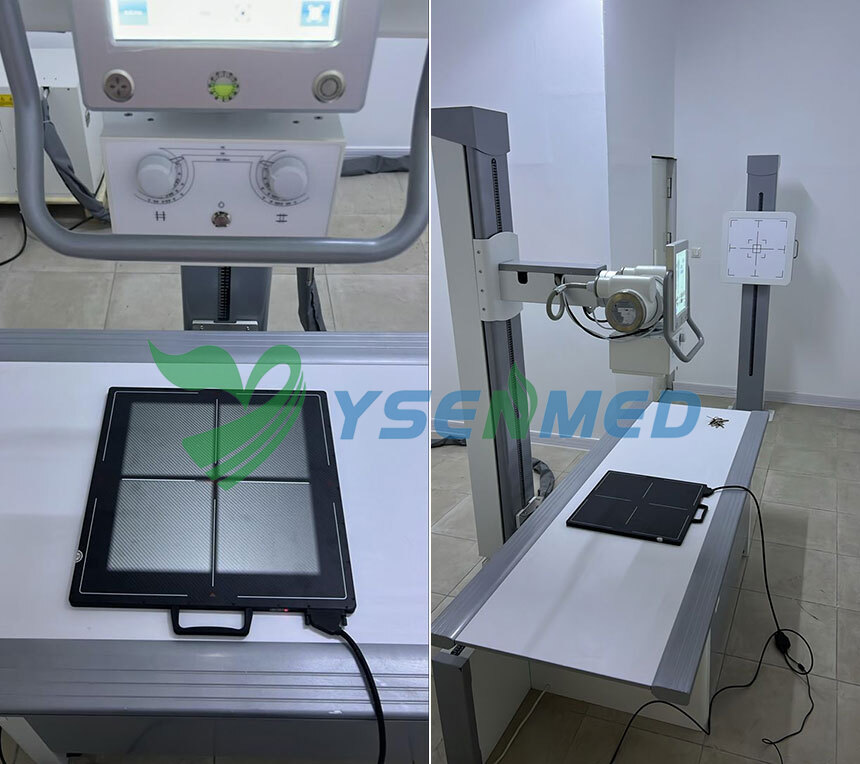
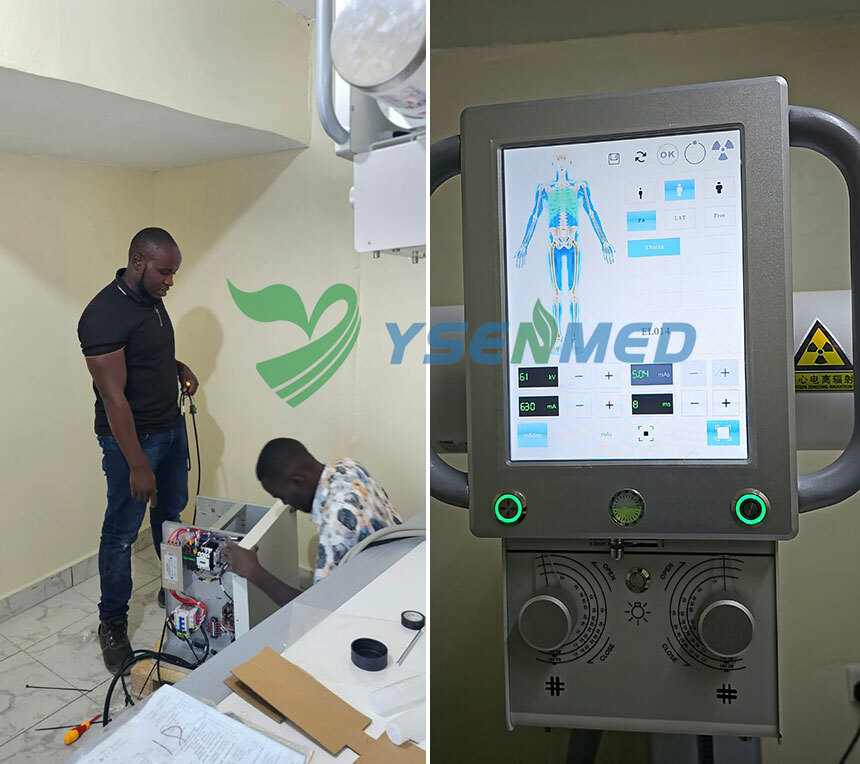
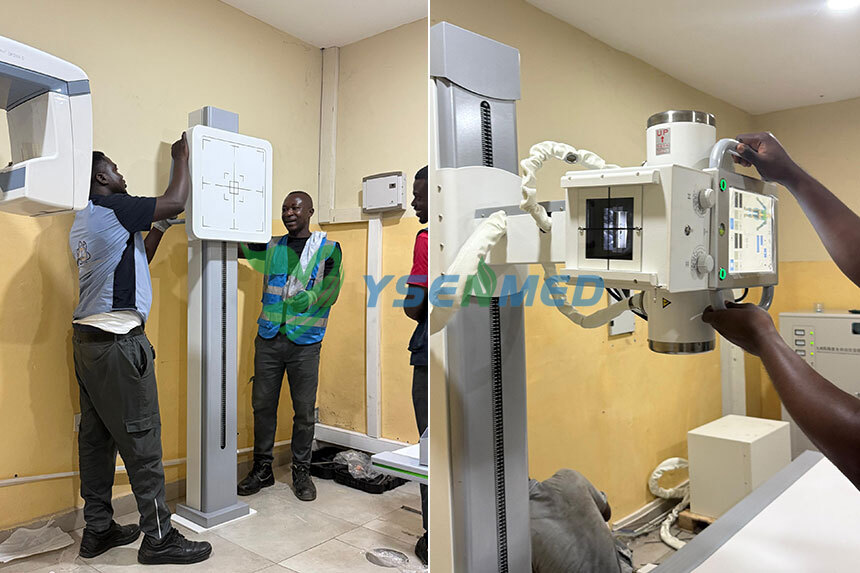
Medical X-ray machines have been a fundamental tool in diagnostic imaging for decades, revolutionizing medical practices and contributing to improved patient care. As technology continues to advance, the future of medical X-ray machines holds exciting possibilities. In this article, we will delve into the potential future development direction of medical X-ray machines, exploring advancements, innovations, and the impact they may have on the field of radiology.
1. Digital Radiography (DR):
Digital Radiography has already made significant strides in recent years, replacing traditional film-based X-ray systems. The future will likely witness further enhancements in DR technology, leading to improved image quality, reduced radiation exposure, and faster image acquisition. Advancements in detector technology, such as direct conversion detectors and photon-counting detectors, will play a crucial role in enhancing image resolution and diagnostic accuracy.
Compared with conventional digital X-ray photography technology, dynamic DR further broadens the scope, ideas and practice of clinical screening and diagnosis of X-ray films. With the new requirements of the era of accurate image diagnosis, dynamic DR has become the future development direction of DR field !
Compared with traditional flat-panel DR, dynamic DR has the function of visual operation, which can solve problems that traditional DR cannot solve, reduce missed diagnosis and misdiagnosis, and improve the accuracy of clinical diagnosis.
Since conventional static digital X-ray examinations are based on two-dimensional anatomical plane imaging, it is impossible to accurately diagnose problems such as overlapping lesions, tiny fuzzy lesions, occult lesions, and adhesions. Dynamic DR realizes all-round observation through multi-angle dynamic real-time images. It can better detect the lesions and carry out the treatment of related diseases.
Dynamic DR integrates conventional radiography, gastrointestinal, fluoroscopy, and angiography, and can be applied to various clinical departments, such as physical examination, internal medicine, surgery, orthopedics, emergency department, etc., and has a wider range of clinical applications.
Unlike conventional static DR, which can only perform plain film examinations, dynamic DR can meet a variety of clinical examination needs, including static examination, fluoroscopy, angiography examination, spine and lower extremity full-length splicing examination. Compared with static DR, it has rich clinical application, and the dynamic DR inspection is more accurate and intuitive, and the efficiency of positioning and filming is greatly improved, which greatly saves filming time.
The dynamic DR image acquisition has a large format and a 17×17-inch super-large field of view, which can cover the entire chest and abdomen of an adult, and can perform real-time high-definition spotting during continuous dynamics, and can also save video, and playback image inspection videos during the consultation process , so as to achieve the purpose of accurate diagnosis. At the same time, dynamic DR also has the function of whole body stitching, especially suitable for whole spine and whole lower extremity photography, assisting spinal deformity correction treatment and rehabilitation inspection, and providing high-precision images for clinical practice.
The multi-functional and cost-effective features of dynamic DR also allow it to meet the general diagnostic needs of multi-level hospitals in application. With the advancement of the hierarchical diagnosis and treatment system, higher requirements have been put forward for the medical service capabilities of primary medical institutions. Conventional static DR can no longer meet the needs of primary medical services for many types of diseases. Institutions provide a solution to this paradox.
2. Cone Beam CT (CBCT):
Cone Beam CT, a three-dimensional imaging technique, has gained popularity in dental and maxillofacial imaging. In the future, CBCT is likely to find broader applications in other specialties, such as orthopedics, interventional radiology, and image-guided procedures. Advancements in CBCT technology will focus on optimizing image quality, reducing radiation dose, and increasing scan speed to improve patient comfort and diagnostic capabilities.
3. Dual-Energy X-ray Imaging:
Dual-energy X-ray imaging allows the differentiation of materials based on their unique energy absorption properties. This technique has promising applications in oncology, cardiovascular imaging, and detection of early-stage diseases. Future developments in dual-energy X-ray imaging will aim to enhance image quality, refine spectral imaging techniques, and expand its clinical applications.
4. Advanced Image Processing and Artificial Intelligence (AI):
The integration of advanced image processing algorithms and artificial intelligence (AI) holds great potential for the future of medical X-ray machines. AI can assist in image interpretation, automated detection of abnormalities, and quantification of disease progression. Deep learning algorithms and machine learning models will continue to be refined, enabling radiologists to make more accurate and efficient diagnoses.
5. Radiation Dose Optimization:
Efforts to minimize radiation dose while maintaining image quality will remain a focal point in the future development of medical X-ray machines. Innovations in dose reduction techniques, such as iterative reconstruction algorithms, adaptive filtration, and optimization of exposure parameters, will ensure patient safety without compromising diagnostic accuracy.
Conclusion:
The future of
medical X-ray machines is poised to bring significant advancements and improvements to diagnostic imaging. Digital Radiography, Cone Beam CT, Dual-Energy X-ray Imaging, advanced image processing, and AI integration will enhance image quality, expand clinical applications, and improve diagnostic accuracy. Furthermore, radiation dose optimization will continue to be a priority to ensure patient safety. As technology continues to evolve, medical X-ray machines will play a pivotal role in advancing medical imaging capabilities and contributing to enhanced patient care.